Customer Success. Technology. Commercial impact.

Jakob H. Jølstad

I build systems that turn customer insight into actions that reduce friction, strengthen loyalty and create measurable business value.

Head of Customer Success, Dintero

Portrait of Jakob H. Jølstad
Jakob H. JølstadHead of Customer Success

Highlights

11 years
In customer experience, digital solutions and payments
Since 2015
Scalable platform
Websites for car dealers, used by more than 50 dealers across Renault and Dacia
An initiative I led at Renault Norge, 2017–2020
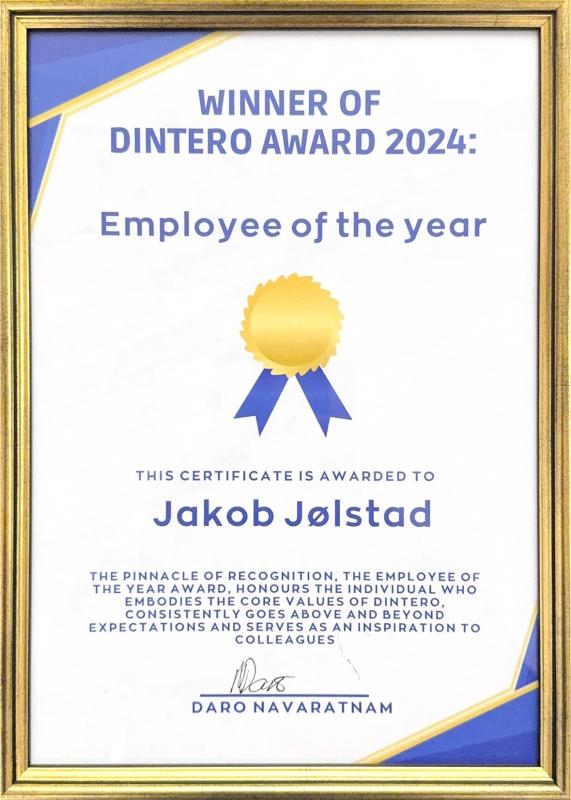
Employee of the Year
Dintero 2024, among about 25 employees. Dintero is a Norwegian fintech scale-up that provides payment solutions for physical and online stores.
Nominated by colleagues, selected by management
Automated Customer Success engine
Built with a calculated Health Score, automatic communication and structured “Go live” processes
Dintero
Intranet from scratch
Built the intranet at Renault Norge, with a UX process from discovery and user research to prototyping, testing and handover to developers
RBI Norge AS (Renault Norge), 2017–2020
CMS in my spare time
Builds advanced CMS systems outside of work
Including for Bærum og Omegn Cykleklubb
Jakob H. Jølstad in front of the screen, thinking

At work

From insight to implementation

segments.py
for customer in customers:    if customer.plugin < "1.15.1":        segment[customer.language].append(customer)send_email(segment)

Customer health

Store AOutdated plugin
Store BVolume dropping
Store CAll good
Store DStuck in setup
Signal→Segment→Email→Check→Resolved

From reactive
to proactive

Built Customer Success from reactive support and onboarding into a proactive and measurable function, with a focus on preventing churn, increasing customer value and scalability for the company.

Data that triggers action

Builds monitoring and workflows in HubSpot that catch outdated WooCommerce versions, risky configurations and signs of churn. Customers are segmented by platform, language and technical status and receive the right message automatically. We then measure whether they did what the message asked.

Fewer unnecessary requests

Classifies preventable support requests and removes the causes in process, communication and technology. The number of such requests per customer fell 13.3% (Jan–Sep 2026 vs the same period in 2025) while the customer base grew 30.2%.

Retention in practice

Steps into customer relationships at risk of leaving and solves the technical and practical causes. Contributes to Dintero's low churn.

Early in the customer relationship

Uncovers misunderstandings, bad habits and setup errors early in the customer relationship. Every customer starts from a different place, and not everything can be seen until they use the solution. The findings go on to product, sales and support.

Automated actions that reduce friction

Example: outdated WooCommerce plugins. The data decides who gets which message in which language, and the system checks for itself whether the customer did what the message asked.

Signal
WooCommercePlatform
Segments
Latest versionUp to date
1.13.x – 1.14.xOutdated
Older versionsSignificantly outdated
Action
No actionNot needed
Email AUpdate guidanceNOSE
Email BUrgentNOSE
Follow-up · loop
Wait 7 days
Checks plugin versionIs it updated?
UpdatedResolved · loop ends
Still outdatedNew round
ReminderEmail · manual follow-up if needed

Experience

Dintero

Head of Customer Success
2020 – present

Built Customer Success from reactive support and onboarding into a proactive and measurable function, with a focus on preventing churn, increasing customer value and scalability for the company.

Employee of the Year 2024 · see the recognition →

RBI Norge AS (Renault Norge)

Digital Manager
2017 – 2020

Led the initiative with a scalable website platform for car dealers, used by more than 50 dealers across Renault and Dacia.

  • Sat between business and engineering: reported needs to the developers and was the dealers' point of contact.
  • Updated the dealers' websites myself and analyzed their traffic, with automated reporting.
  • Developed an internal intranet in SharePoint, designed and automated newsletters and was senior user on digital projects.
  • Contributed to compliance with brand guidelines and GDPR.
“Jakob is capable, detail-oriented, creative, proactive, solution-oriented and helpful. He has carried out the assignment in an impressive way!”
Stine Fratras, Marketing Manager, RBI Norge AS
Was Jakob's manager at Renault Norge · LinkedIn recommendation, 29 July 2020 · translated from Norwegian

Bambora

Customer Support Agent
2016 – 2017

Technical support for payment terminals and online payments. This is where the payments foundation began.

GoExcellent Norway AS (Apple)

CPU Technical Advisor
2015 – 2016

Technical troubleshooting and customer advice on iOS and macOS. Learned to “solve the customer” rather than just solve the problem. CSAT of 96/100 across 3,000 tickets.

Bærum og Omegn Cykleklubb

Website with CMS

Built the club's website with a full CMS and role-based access control. Privacy is solved in the system itself, not just with a cookie banner: images can be blurred and names anonymized with one click.

Stories from work

Eight examples of how I think, work and get things done.

Reactive

Problem occurs→Customer gets in touch→Support resolves

Proactive

Signal detected→Customer gets help→No request
Strategy and Customer Success2024–2026

From solving problems to preventing them

The challenge

When I joined Dintero in August 2020, my role covered customer support, onboarding, technical implementation and a range of operational tasks. As the company grew, it became clearer to me that reactive support is not the same as Customer Success. We solved problems well, but always after the customer had experienced them.

The insight

Every problem we solved was a problem someone had already had. Many recurred. If we could see the patterns, we could remove the causes instead of treating the symptoms. It is also a business question: friction costs customers time, and it costs the company both support capacity and customer relationships.

The approach

In early 2024 I raised this with the CEO. I presented a strategy for a more proactive Customer Success function: identifying recurring friction, understanding customer behavior, preventing unnecessary problems and strengthening retention. As the support organization grew, I got more room for proactive work from autumn 2024. I developed customer segmentation, automated communication, monitoring and a systematic way of catching recurring problems. An important part was creating measurements for things we had not been able to quantify before.

The outcome

Customer Success works differently today than in 2020: more with data, more with prevention and with goals we can follow over time. This is a function that has been developed within Customer Success. I have not reorganized the company and I have no formal responsibility for support. The measurable results come in the next story.

What it shows

Initiative and business understanding: seeing that a function could do more than it was set up for, arguing for it to leadership and then building it myself, together with support, sales and product.

Active customersPreventable Support+30.2%+12.8%20252026Scalability+13.3%
Data and improvement2026

13.3% fewer preventable requests. 30.2% more customers

The challenge

Total support volume says little on its own. If the customer base grows, the number of requests grows too. I wanted to answer a more useful question: is it actually getting easier to be a customer as we grow?

The insight

Not all requests are alike. Some come from things we can influence, such as unclear guidance, incorrect setup or missing communication. Others are outside our control. If we separate them and measure relative to the customer base, we get a number that shows friction over time and points to what is worth fixing first.

The approach

I developed a framework for separating potentially preventable requests from the rest, and used customer and support data to create the measure potentially preventable requests per 100 active customers. It gave us a place to start when prioritizing proactive communication, technical improvements and better guidance for customers.

The outcome

In January–September 2026, the number of potentially preventable requests per 100 active customers was 13.3% lower than in the same period in 2025. In the same period the customer base grew by 30.2%. This is not a drop in total support volume, and the figures show an observed trend, not proof that each reduction is due to my actions. Much of this is teamwork.

What it shows

Analytical thinking and the ability to develop good measurements: finding the number that actually answers the question, and using it to choose what to do first.

Outdated pluginOlder PHP versionTargeted email NOSE
Data and automation2026

Good customer data in the CRM turned a critical issue into a campaign within hours

The challenge

When a critical issue is found, time matters. Outdated WooCommerce plugins and certain technical setups can create security risk and friction for customers, and many of them did not know they were affected. Reaching the right customers quickly requires customer data that is collected, current and available where the team works: in the CRM.

The insight

The value of good customer data only shows when something goes wrong. If you have to hunt for who is running what at that moment, you are already late. We needed the technical status of every customer available in HubSpot, not in a separate system or a spreadsheet.

The approach

I built the integration between Hex and HubSpot that moves technical customer data, such as plugin and PHP versions, into the customer records. When the issue appeared, I could segment customers by technical status and set up a targeted campaign within a few hours, with guidance matched to each group's situation instead of a generic mass mailing.

The outcome

44% of the audience took action within a couple of days. That is a high response rate for a technical request, and it came from reaching the right customers with the right message quickly. The point is not the campaign itself, but that the data was ready when we needed it.

What it shows

The value of customer data in the CRM when it counts: data integration, segmentation and targeted communication, built and carried out by me from start to finish.

SymptomWhat the customer notices
CauseWhat is actually wrong
Still a customerThe relationship holds
Retention and commercial value2024–2026

When a customer considers leaving, the problem is rarely just the price

The challenge

Over the years at Dintero I have worked with customers experiencing problems serious enough to threaten the relationship. Some cases have been escalated to me after support or sales could not resolve the underlying problem.

The insight

What the customer first complains about is rarely the whole picture. Sometimes the cause is technical. Other times it is about the customer's setup, internal processes or expectations. If you only answer the immediate complaint, you often solve the wrong problem.

The approach

I start by finding the actual obstacle. I have investigated complex payment and integration problems, worked with internal teams, talked directly to customers and helped get solutions in place. It requires understanding the technology, understanding the customer's situation and explaining both to the other side.

The outcome

In documented cases, this work has contributed to customers who were considering leaving staying. I have not saved everyone, and I have not done it alone: the solutions come from working with support, sales and engineering. Out of consideration for the customers, I do not describe individual cases or amounts here.

What it shows

The ability to connect technical problem-solving with commercial value: taking ownership of difficult cases, finding the cause and getting it solved together with the people who can do it.

Customer understanding and commercial value

Cheaper Klarna at a competitor does not mean lower cost

The challenge

A customer wanted to switch from Dintero because she could get Klarna cheaper from a competitor. On its own she was right: Klarna cost more with us.

The insight

The price of one payment method says little about what a store actually pays. What counts is the average cost across all payments, and that depends on the payment mix: how customers split between the methods on offer.

The approach

I started from the payment mix I saw in stores similar to hers and compared two setups: the competitor's, where Klarna was one of two options, and ours, where Klarna was one of four. Even though Klarna on its own cost more with us, the average cost was lower with four options than with two.

The outcome

The conversation moved from the price of one payment method to what the store actually pays on average. The argument held because it was built on the payment mix in similar stores, not on a promise.

What it shows

Commercial understanding in the customer conversation: seeing the whole picture behind a price comparison, using data from similar customers and explaining it simply.

The customer's needTurn downCustomer looks elsewhereListen and find a wayCustomer stays
Customer understanding and commercial value

“We don’t have that” doesn’t mean you have to lose the customer

The challenge

A Shopify customer asked whether we supported subscription payments on specific products. He wanted all payments to go through us. That was something we could not offer.

The insight

The simplest answer was “we don't have that”. It would have been true, but it would have left the customer with a problem and a natural opportunity to look at other providers. His question was really about something else: he did not want to split his payment flow across solutions. The need was reasonable, even though our product did not cover it.

The approach

I told it like it was: we did not support it. But I took the need seriously and looked into how it could be solved in Shopify. I worked out how we could set up rules in Shopify that bring in Shopify Payments, another payment method, only when certain products are in the cart. Everything else kept going through us.

The outcome

The customer was very happy that we thought along with him instead of turning him down, and we kept all existing volume. At the same time we have an opening for upsell later, once we build support for what he needed. The solution was a workaround and not a replacement for product support, and that is also how I describe it.

What it shows

That I listen for the need behind the question and use technical understanding to find a way, instead of stopping at the limits of the product. It protects the volume today and gives a concrete starting point for growth later.

Customer experience and Customer Success2026

When there is no error, but the customer is still unsure

The challenge

A customer saw orders go from “processing” to “cancelled”. Support had looked into it and correctly concluded that there was no error. The payments had not failed. But the customer was still unsure what was happening, and the cancelled orders remained an unanswered question.

The insight

The case was solved for Support, but not for the customer. Those are two different goals. Support determines whether something is wrong, and is done when the answer is correct. Customer Success has to determine whether the customer is confident, and is not done until the customer has understood. You have to solve the customer, not just the problem.

The approach

I contacted the customer myself. First I went through the underlying payment sessions to understand what had actually happened: the orders had never completed payment and were cancelled after a timeout. That is a difference in how the integration represents abandoned payment attempts, not a payment failure. Then I explained it on the customer's terms: what the statuses mean in the shop, why they look the way they do and what they can ignore. The technology was only the means. The job was to give them a picture they could trust.

The outcome

The customer got an explanation that matched what they saw in their own shop, instead of a conclusion that everything was fine. I do not claim any conversion gains or financial results, and I do not take credit for Support's assessment: it was right. What I added was following the case all the way until the customer had the explanation in hand.

What it shows

The difference between Support and Customer Success: Support finds out whether something is wrong. Customer Success makes sure the customer is confident, even when the answer is that everything works. It takes technical understanding to find the explanation and customer understanding to communicate it.

Digital development2017–2020

One brand. Over 50 websites

The challenge

Before Dintero I was Digital Manager at Renault Norge. There I led the initiative with a scalable website platform for car dealers, used by more than 50 dealers across Renault and Dacia. The challenge was to give each dealer a website that worked for them without losing a unified brand experience.

The insight

Scaling is about deciding what should be the same and what can vary. When the platform handles what is shared, dealers can spend their time on what they do best, and we can improve everything at once.

The approach

I sat between business and engineering: reported needs to the developers, was the dealers' point of contact, updated their websites myself and analyzed traffic to see what worked. I also built an internal SharePoint intranet, automated reports and newsletters, and contributed to compliance with brand guidelines and GDPR.

The outcome

The verified result is the platform and that it was adopted by more than 50 dealers. I do not have figures for traffic growth or sales, and I leave those out.

What it shows

Product development at scale: owning a project across many parties, combining design, technology and brand understanding, and delivering something others can use without me. It is the foundation for everything I have done since, where customers, technology and business meet.

Four fields.
One way of working

Relationships

  • Retention and churn prevention
  • Activation and adoption
  • Onboarding and go-live
  • User experience and simpler customer journeys
  • Proactive, scalable communication

Technology

  • WooCommerce and Shopify
  • Payment integrations and checkout
  • Technical troubleshooting
  • HTML, CSS, JavaScript and Python (practical use)
  • Automation in HubSpot
  • AI-assisted development

Data

  • Customer and transaction analysis
  • Segmentation by technical status and behavior
  • Customer health and early signals
  • Reports and dashboards
  • Measuring effect after actions

Business

  • Payment conversion
  • Upsell and growth in existing customers
  • Prioritizing by impact
  • Cross-functional influence with product, sales and support
  • Efficient, scalable processes

Recognition and certifications

Dintero Award 2024

Employee of the Year

Nominated by colleagues and selected by management, among about 25 employees.

The award goes to the person who embodies the company's values, consistently goes above and beyond expectations and inspires colleagues.

Certificate: Dintero Award 2024, Employee of the Year, awarded to Jakob Jølstad
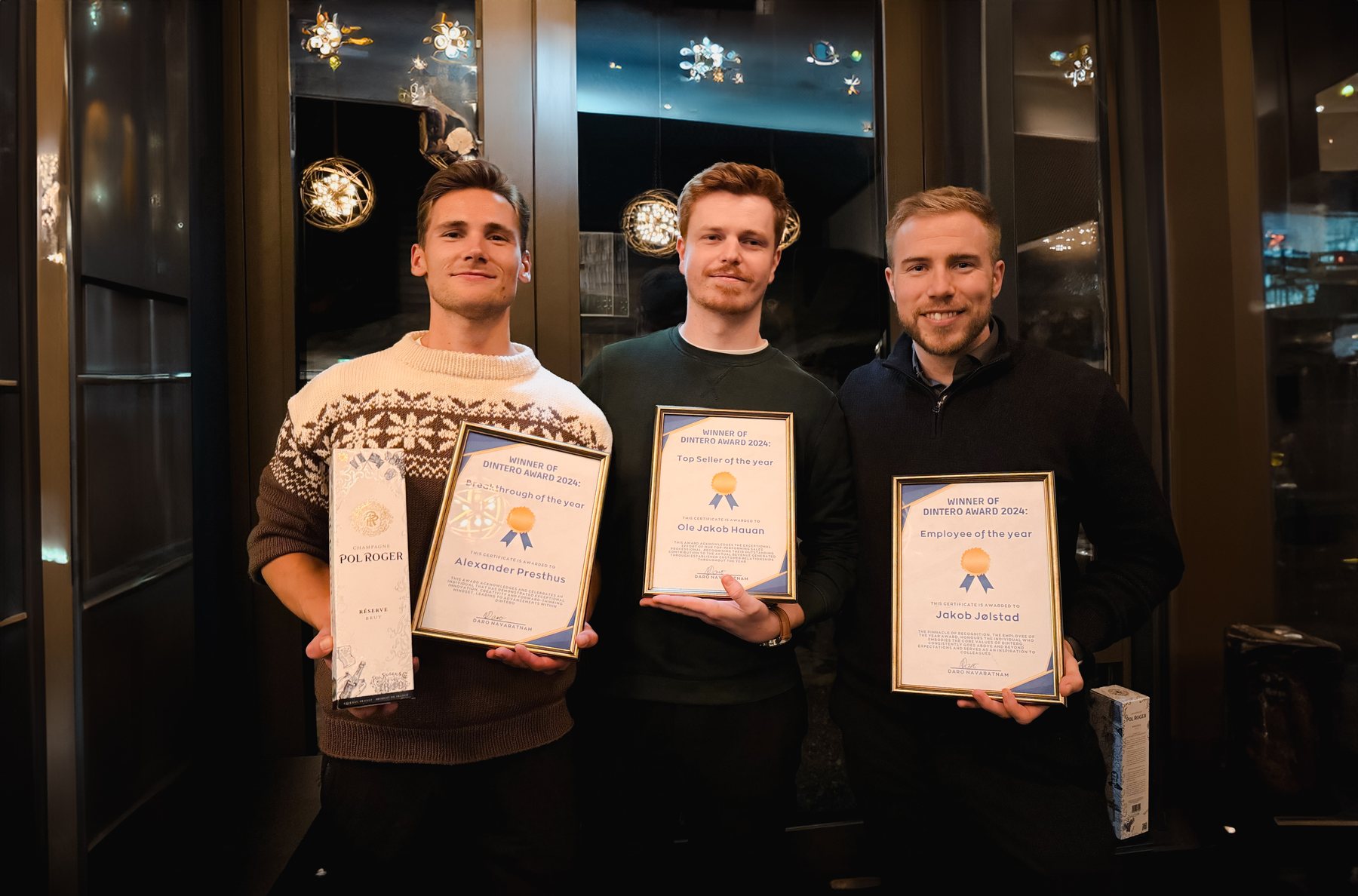
Jakob with the Employee of the Year certificate, together with the Top Seller and Breakthrough of the Year winners
Dintero Awards 2024, with the Top Seller and the Breakthrough of the Year.
Bachelor of Arts, Art (minor: Architecture) · University of Houston, 2010–2014
  • Principles of good design
  • Graphic design
  • 3D modeling
  • Basic coding
PRINCE2PRINCE2 Foundation, certification training · PeopleCert, July 2019

Let's have a chat 💬

Get in touch